


Chief Judge Beach’s Response to My Request to Remove Judge Lyke from Criminal Cases Is Appalling - By Chief Tom Weitzel (Ret.), Fellow of Law Enforcement

Chief Judge Beach’s Response to My Request to Remove Judge Lyke from Criminal Cases Is Appalling
Who Holds Cook County’s Judges Accountable?
By Retired Police Chief Tom Weitzel, Awake Illinois Fellow of Law Enforcement
Accountability is not optional. It applies to everyone entrusted with public authority—including judges and the officials who administer the courts. That is why the October 5, 2026, response from the Office of Cook County Chief Judge Charles S. Beach II to my request regarding Judge John F. Lyke Jr. is so appalling.
On September 24, I wrote Chief Judge Beach raising serious concerns about Judge Lyke’s courtroom conduct, his treatment of Cook County sheriff’s deputies, and the resulting risks to courtroom security. I asked that he be removed from his criminal assignment, that his conduct be reviewed, and that a professional, safety-first culture be restored.
I received a one-paragraph reply dated October 5 from Katherine Nolan, Director of the Legal Research Division:
“I am writing in response to your email to Chief Judge Charles S. Beach II. The administrative authority of a chief judge does not include the authority to address the issues raised in your correspondence.”
No review of the allegations. No discussion of courtroom safety. No explanation of the limits of the chief judge’s authority or any alternative process. Just a door closed.
A Response That Avoids the Substance
I wrote as a retired police chief and Fellow of Law Enforcement at Awake Illinois. The issues I raised—security protocols, the treatment of deputies, and judicial assignments—are administrative and operational. They are not requests to dictate the outcome of any individual case.
Illinois Supreme Court Rule 21 charges chief judges with administering judicial assignments and managing court operations. The October 5 letter does not explain why these concerns fall outside that authority or what steps, if any, were considered. A bare assertion of limited power is not a response; it is a dismissal.
If Chief Judge Beach believes he lacks authority, he should identify the legal basis and the proper channel. If the concerns have been examined, the public deserves to know what process was followed. Marginalizing the messenger instead of engaging the message undermines confidence in the system.
The Stakes Are Real
These questions sit against a troubling record.
In December 2025, Judge Lyke released Alphonso Talley on electronic monitoring over prosecutors’ objections. Talley, a repeat violent felon with multiple pending cases, later escaped monitoring and was charged in the April 2026 shooting at Swedish Hospital that killed Chicago Police Officer John Bartholomew and critically wounded his partner. CWB Chicago has reported extensively on the decision, the monitoring failures, and Chief Judge Beach’s subsequent comments.
In September 2026, CWB Chicago reported that Judge Lyke ordered two sheriff’s deputies detained after they sought supervisory approval before removing restraints from a high-risk murder defendant so the defendant could hug family members. Sheriff’s Office policy required that approval. The incident raised clear questions about whether deputies can enforce security protocols without fear of retaliation.
These are not abstract administrative disputes. Courtroom security procedures exist to protect everyone in the building. When they are overridden or when those charged with enforcing them face detention, the risks are immediate.
Accountability Cannot Stop at the Courthouse Door
Judicial independence is essential. It does not confer immunity from scrutiny over courtroom operations, assignments, or the treatment of law-enforcement personnel who provide security. Police departments investigate complaints and explain their actions. The courts should do the same.
Chief Judge Beach should clarify the legal basis for the October 5 response, state whether my September 24 concerns were reviewed, and identify any process available for addressing allegations that courtroom conduct is compromising security. If another body has authority, the public should know which one and how to reach it.
Let the Public Read the Letters
I am publishing both letters so readers can judge for themselves.
My September 24, 2026, letter to Chief Judge Beach:

The October 5, 2026, response from the Office of the Chief Judge:

This is not about personal animosity. It is about public safety, institutional responsibility, and whether accountability applies inside the courthouse as well as outside it. The time for bare assertions is over. The public deserves answers.

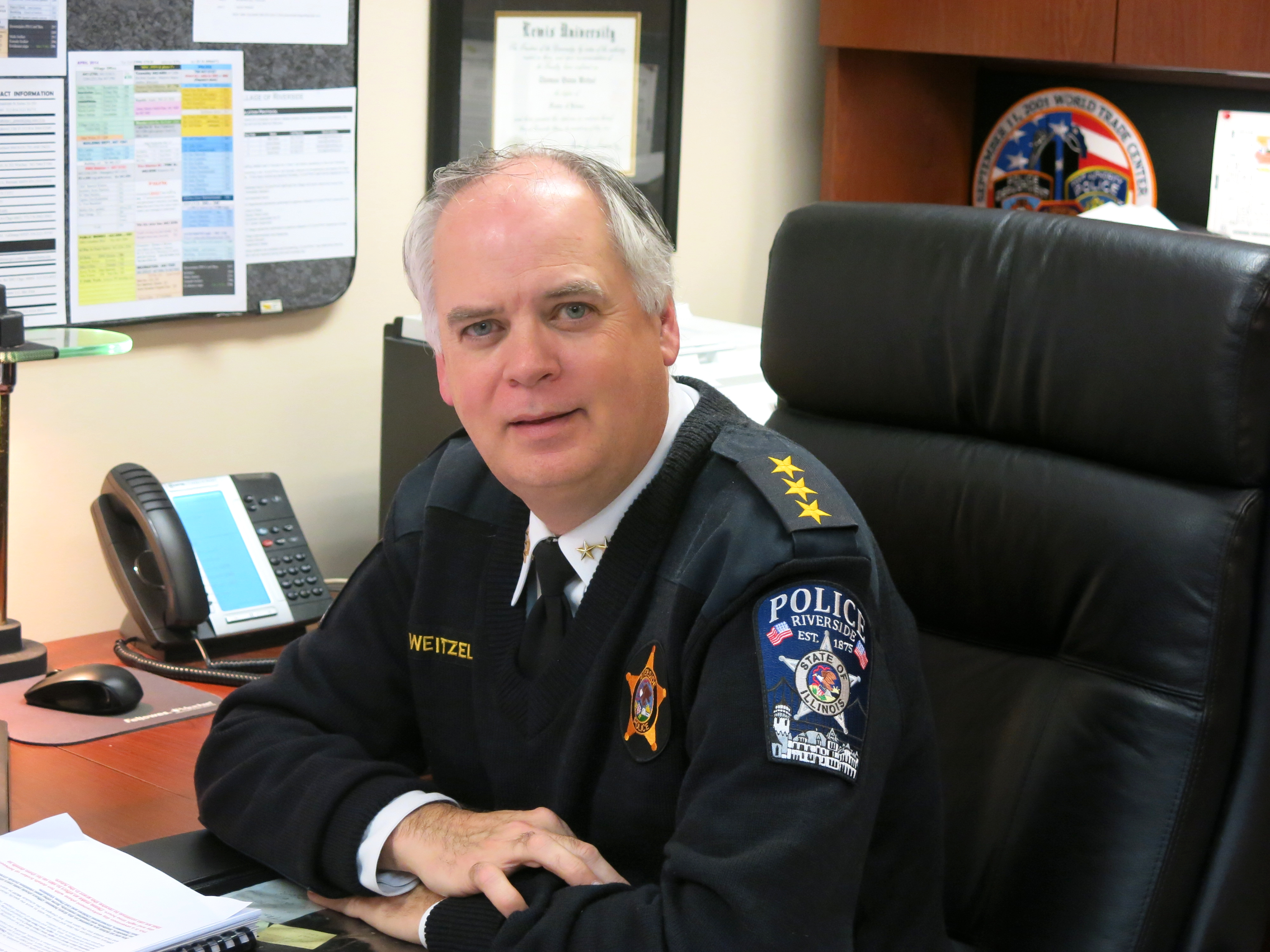
About Tom Weitzel, Awake Illinois Fellow of Law Enforcement: Tom Weitzel retired from the Riverside, Illinois, Police Department in May 2021 after 37 years in law enforcement, including 13 years as Chief of Police. The opinions expressed are his own. He can be reached at tqweitzel@outlook.com and followed on X at @chiefweitzel.


Comments