


Weitzel Op-Ed: Illinois Has Lost Its Moral Compass on Justice for Fallen Police Officers
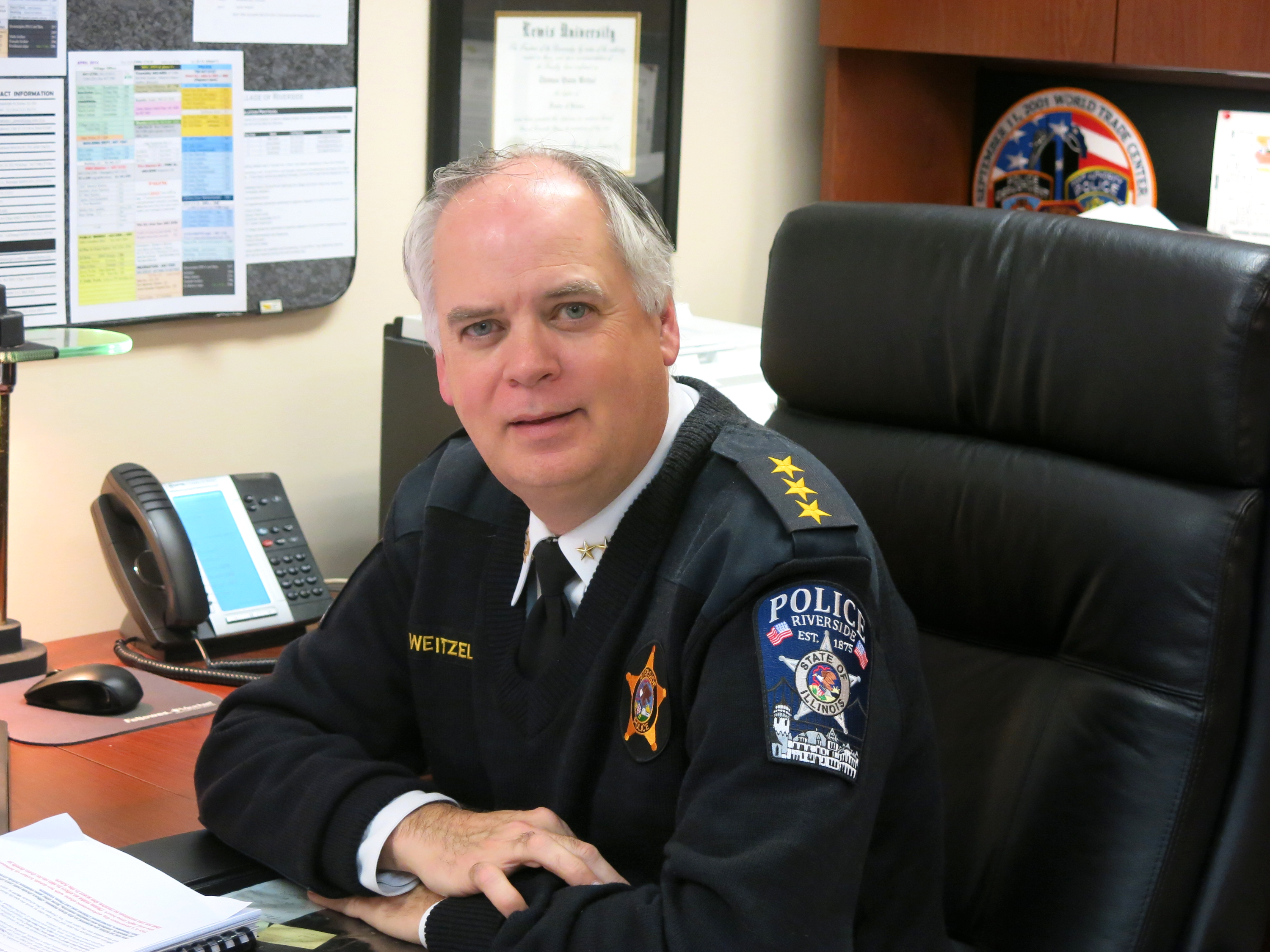

By Awake Illinois Fellow of Law Enforcement, Chief Tom Weitzel, (Ret.)
January 26, 2026
The murder of a police officer is not just another homicide. It is a direct assault on the rule of law and on every citizen who relies on that law for protection. When an officer dies in the line of duty, justice must be certain, permanent, and insulated from political negotiation.
In Illinois today, it is not.
A series of criminal justice reforms—rooted in developmental science and aimed at addressing excessive punishment for youthful offenders—has created a troubling outcome. Under current law (including Public Act 102-1128 and related provisions in 730 ILCS 5/5-4.5-115), individuals convicted of first-degree murder—including the murder of an on-duty police officer—may become eligible for parole review after serving 40 years if they were under 21 at the time of the crime. This is not a loophole or hypothetical; it is the statute as applied, even when a court imposes what is termed a "natural life" sentence.

Consider Chicago Police Officer Andrés Mauricio Vásquez Lasso. At 32, he was an immigrant who arrived in the United States at 18, learned English, embraced American values, and chose a career of service and sacrifice. He joined the Chicago Police Department in 2018 and quickly earned respect for his professionalism and dedication.
On March 1, 2023, Officer Vásquez Lasso responded to a domestic violence call involving an armed suspect. When the offender fled, he pursued on foot and issued lawful commands to stop. The 18-year-old suspect turned and fired multiple rounds in a public playground in broad daylight, with children nearby. Officer Vásquez Lasso died doing what society demands of its police: running toward danger so others do not have to.
Yet Illinois law now conveys to his family, his colleagues, and every serving officer that the man who killed him may one day be eligible to seek release.
I have reviewed the relevant statutes carefully, and the conclusion is clear: this application of the law is wrong. The intent behind youth sentencing reforms—to account for brain development and avoid disproportionate punishment for young offenders—may be defensible in isolation. But extending parole eligibility to those who intentionally murder police officers erases critical distinctions between offenses and undermines the unique gravity of such crimes.
Defenders of the law argue that eligibility does not guarantee release, that parole boards can deny petitions, or that the provision applies equally to all. These points fail moral scrutiny. Justice for victims and survivors demands more than the mere possibility of continued incarceration. It requires certainty and finality—especially for families facing irreversible loss.
Illinois' legislative priorities have increasingly centered on offenders: rehabilitation, reform, and redemption. The voices of those who endure the lifelong consequences of violence—survivors, widows, parents, and fellow officers—have been sidelined.
What does the law offer the widow of a fallen officer? The parents who buried a child? The colleagues who carry trauma from the scene into every shift? Mere notification of parole hearings, a chance to submit statements, and the prospect of reliving their worst day decades later while the perpetrator seeks freedom. That is not compassion. It is institutional indifference.
This provision fits into a broader pattern that has made Illinois one of the nation's most challenging environments for law enforcement: proposed stripping of qualified immunity, imposing rigid discipline rules without adequate context, enacting sweeping reforms with limited input from frontline officers. Each step signals distrust of police.
Allowing parole eligibility for cop-killers is the starkest example. It implies officers' lives are subject to future political or rehabilitative balancing tests. It suggests sacrifice has an expiration date. And it signals to would-be assailants that even the gravest act may eventually be reconsidered.
Lawmakers must move beyond process and address the substance. The General Assembly should enact a narrow, precise statutory amendment: prohibit parole eligibility entirely for anyone convicted of murdering a law enforcement officer in the line of duty, regardless of age at the time of the offense. Youth sentencing reforms can remain, but the murder of an on-duty officer must be a categorical exception—consistent with how Illinois already imposes enhanced penalties for certain crimes.
Additional protections should spare families from repeated parole proceedings. Justice must be final for offenders and merciful to survivors. Governor Pritzker, Senate President, Speaker of the House: You cannot claim to support law enforcement while preserving this law. You cannot honor fallen officers at memorials while statutes quietly erode the permanence of their sacrifice. This is not about being "tough on crime." It is about honesty in justice.
Do not tell grieving families that "life" does not truly mean life. Do not force them back to hearing rooms decades later to justify their pain. Do not accept this as a necessary cost of reform.
Illinois has lost its balance. It is time to restore it. If the state truly values those who protect it, the law must say so clearly, decisively, and without exception. Anything less is a failure of leadership.
History will remember who stood up, and who did not.
About Tom Weitzel, Awake Illinois Fellow of Law Enforcement: Tom Weitzel retired from the Riverside, Illinois, Police Department in May 2021 after 37 years in law enforcement, including 13 years as Chief of Police. The opinions expressed are his own. He can be reached at qweitzel@outlook.com and followed on X at


Comments